08 The Lucid Plants line
Mist
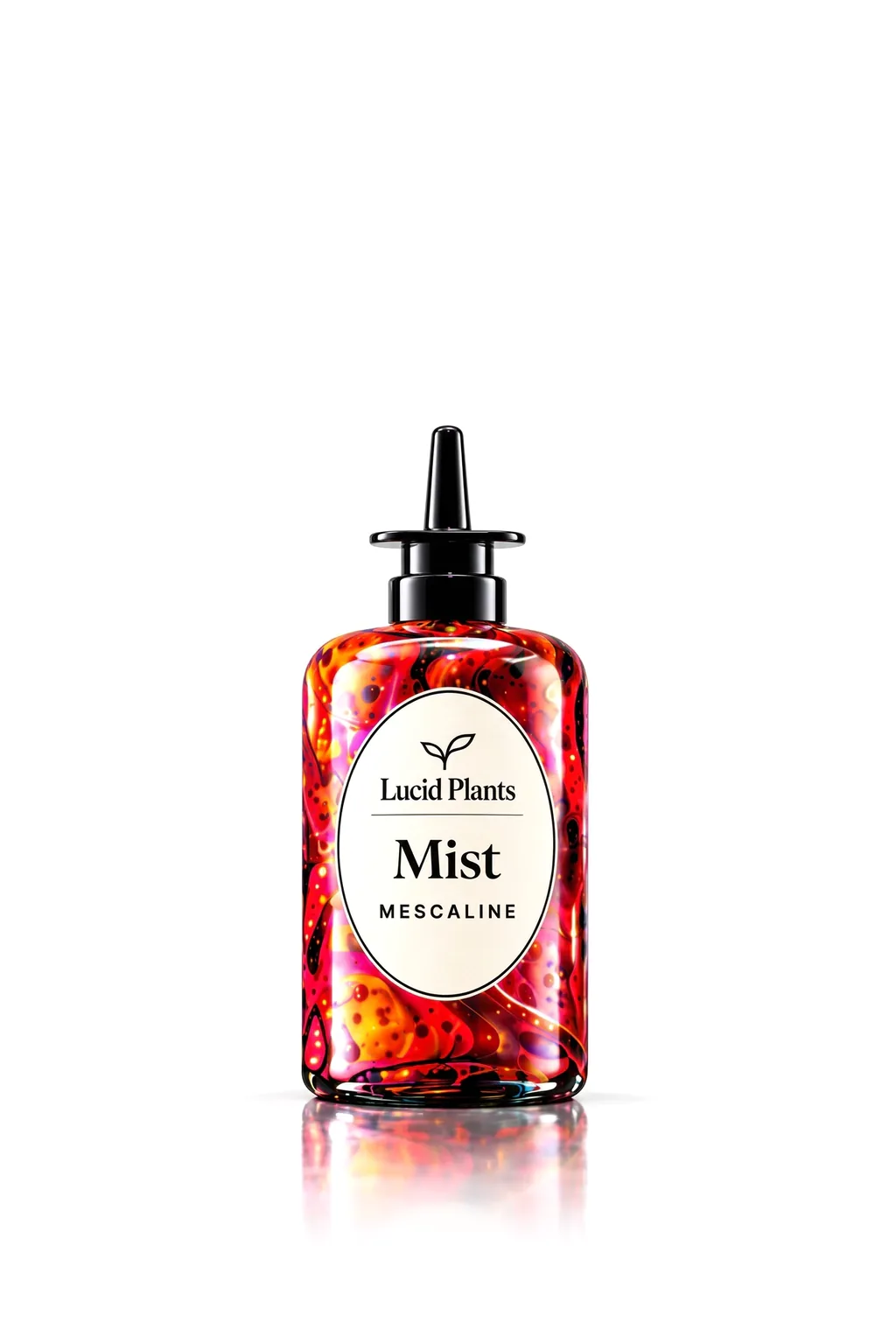
A concentrated mescaline spray in a small glass bottle, made in the laboratory so that no cactus is taken.
- Substance
- Mescaline
- Planned form
- Nasal spray
- Status
- In development
01 The product
What Mist is
Mist is our mescaline nasal spray: concentrated mescaline in a small glass bottle. We are working on its formula now.123
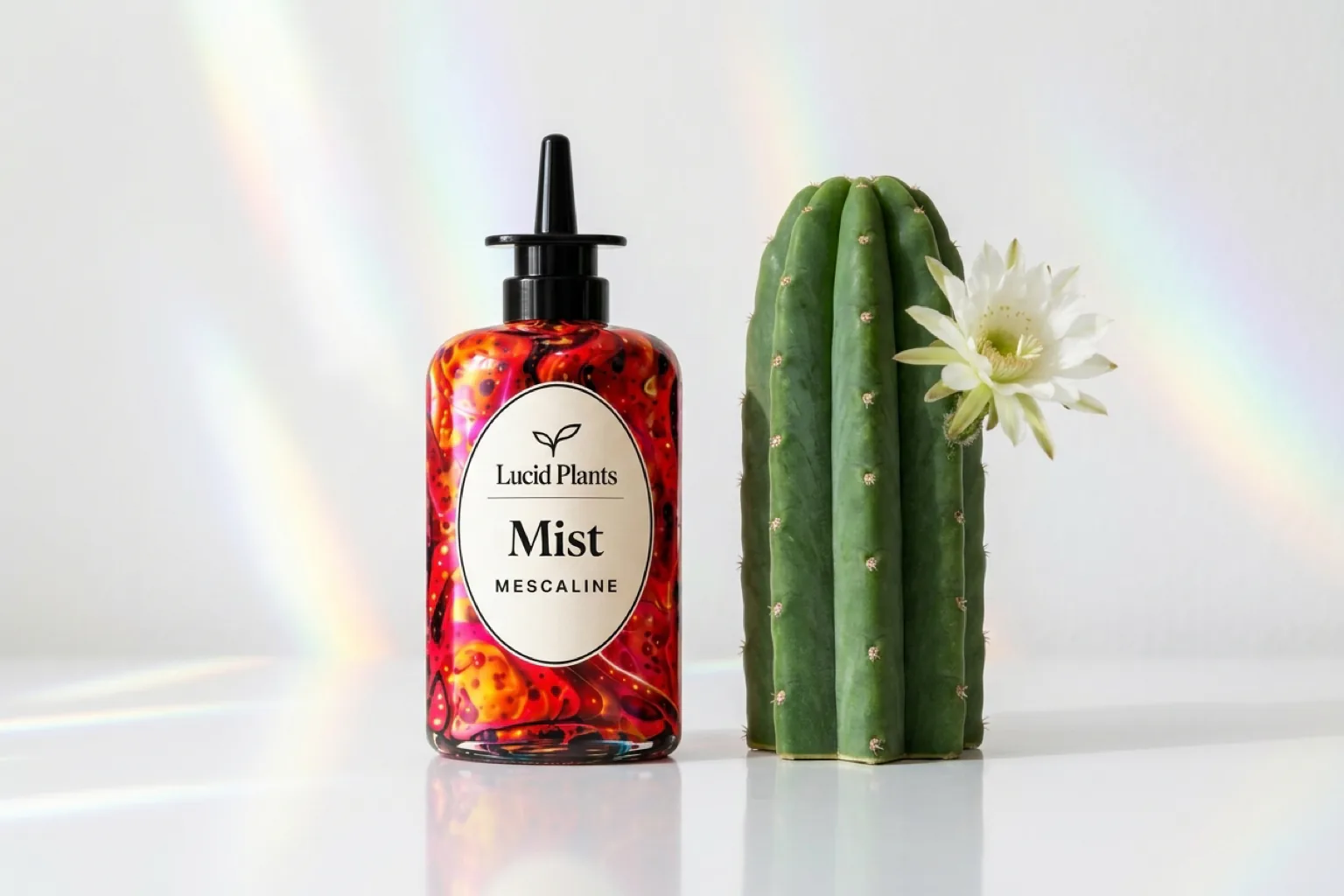
The mescaline in Mist is made in a laboratory. No cactus is harvested for it, and peyote stays with the peoples who hold it.4
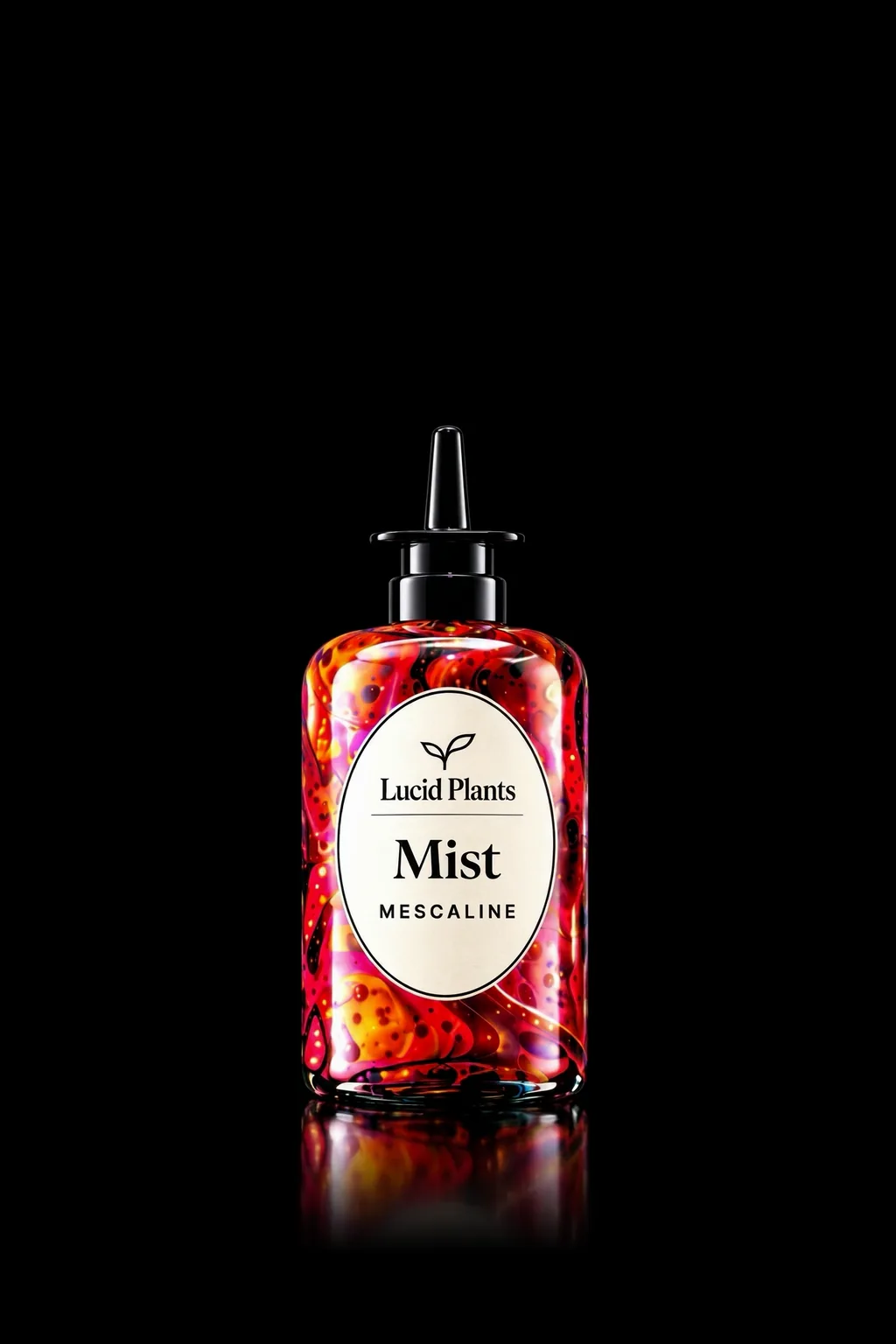
The bottle is wrapped in soap-film red and orange, with Mist above MESCALINE on the label.25
02 The experience
A long, slow psychedelic
Mescaline is one of the classic psychedelics, alongside LSD and psilocybin. In a randomized, double-blind study in Basel, 32 healthy volunteers received all three on separate days. The experiences were comparable in kind, and mescaline's lasted longest, about eleven hours on average.6
A second randomized, double-blind study followed 16 healthy volunteers. Mescaline raised blood pressure and heart rate, and at the highest amount tested six of the 16 volunteers vomited. In both studies people swallowed mescaline. A spray is a different route, and route shapes how a substance arrives.7
03 The evidence
What the research says
Modern mescaline research is young. The two Basel studies are small and enrolled healthy volunteers, so they describe how mescaline acts. In an online survey of 452 people who had taken mescaline on their own, most of those who reported depression or anxiety said it improved after their most memorable mescaline experience. A survey gathers memories from people who chose to answer. It shows what people report, and controlled trials come next.678
We found no published study that tests mescaline as a nasal spray. The published human studies gave it by mouth, so how a spray carries mescaline is the question our formula work has to answer. Mist is our own expression of it.139
04 The roots
From the Andes to the laboratory
People have known mescaline through cacti for a very long time. In Peru, stone carvings of the Chavín culture, dated to about 1200 to 500 BCE, show a cactus that archaeologists read as San Pedro, and healers in northern Peru still work with San Pedro today. In North America, the Native American Church has long treated peyote as a sacrament.101112
The molecule reached the laboratory in 1896, when the German pharmacologist Arthur Heffter isolated it from peyote. Ernst Späth completed the first synthesis in 1918 and published it in 1919. Since then mescaline can be made without a cactus, and that is the path Mist takes.41314
Not everyone welcomes that path. In July 2026 the Council of Peyote Way of Life Coalition told the US drug regulator that it opposes the expanding pharmaceutical production of mescaline, synthetic mescaline included, and asked it to protect peyote for ceremonial use by federally recognized tribes.15
As of November 2026, the 1971 UN Convention on Psychotropic Substances lists mescaline under strict international control, and US federal law lists it in Schedule I. A laboratory origin or a spray form changes neither. Mist belongs to the legal world we are building.161718
05 What comes next
Built for the
legal world.
We are currently working with policymakers around the world on legalization. The details of those talks are not public yet, and we expect the law to change very soon.1920
We're already working on the formulas. Nothing is for sale yet.318
Apply for early access through Lucentive One and tell us which medicine you care about.21
Follow the evidence
The sources behind this page.
- 1Founder statement: The planned products
- 2Founder statement: Mist, the mescaline nasal spray
- 3Founder statement: The formulas
- 4Founder statement: Why peyote is not in the line
- 5Founder statement: How the labels work
- 6Ley et al. 2023, Neuropsychopharmacology
- 7Klaiber et al. 2024, Translational Psychiatry
- 8Agin-Liebes et al. 2021, ACS Pharmacology and Translational Science
- 9Internal research record
- 10Sharon 2019, Sacred Sanpedro in ethnoarchaeological context, Ñawpa Pacha
- 11Glass-Coffin 2010, Shamanism and San Pedro through Time, Anthropology of Consciousness
- 12Pollan, This Is Your Mind on Plants
- 13The fourfold discovery of Mescaline (1896 to 1919), Monatshefte für Chemie 2019
- 14The fourfold discovery of Mescaline (1896 to 1919), Monatshefte für Chemie 2019
- 15Council of Peyote Way of Life Coalition, letter to the DEA, docket DEA-2026-0760
- 16UN Convention text
- 1721 CFR 1308.11, Schedule I
- 18Founder statement: Nothing is for sale yet
- 19Founder statement: Our work with policymakers
- 20Founder statement: What we expect from the law
- 21Founder statement: Early access through Lucentive One
Early access
Stay in
the light.
Apply for early access to Lucid Plants. Sign in with Lucentive One, the one account for everything Lucentive builds, and tell us a little about yourself and the medicine you are drawn to.
It takes a minute, and you can change your answers or leave whenever you want.